Powerline Clearance Rules Homeowners Must Know in 2026
6 min read
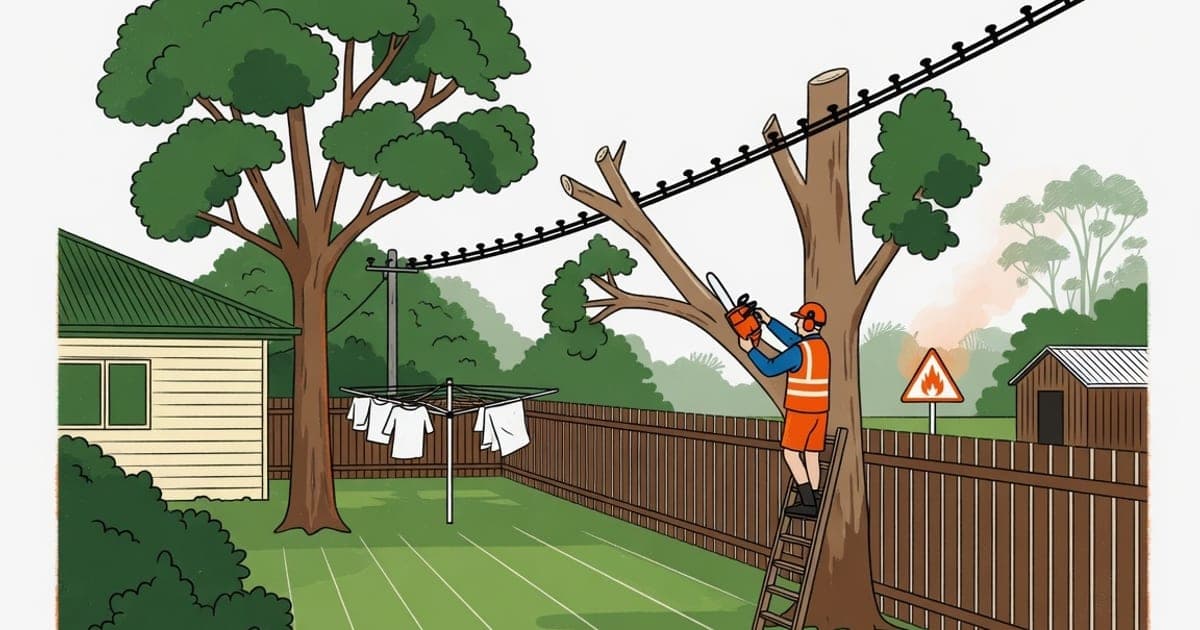
Homeowners in Australia must understand the Electricity Safety (Electric Line Clearance) Regulations 2026 to keep vegetation clear of powerlines and reduce risks of bushfire ignition or electrocution. These rules apply particularly in Victoria where Energy Safe Victoria oversees compliance through the Code of Practice for Electric Line Clearance. Distributors such as Powercor perform regular inspections and cutting around their assets while homeowners bear responsibility for trees on private property. Failure to maintain required clearances can lead to notices, costs and safety hazards.
Understanding the Electricity Safety (Electric Line Clearance) Regulations 2026
The Electricity Safety (Electric Line Clearance) Regulations 2026 set out management procedures to minimise the danger of electric lines causing fire including bushfire or electrocution. They include the Code of Practice for Electric Line Clearance which prescribes standards and practices for tree work near powerlines. These regulations came into effect in June 2026 and replace earlier versions to strengthen bushfire mitigation efforts across the state.
Homeowners need to recognise that the rules focus on preventing vegetation from growing into clearance spaces around electric lines. The regulations require responsible persons to keep trees clear regardless of specific distances in some cases but the Code provides detailed guidance. Energy Safe Victoria enforces these through inspections and can issue infringement notices for non compliance.
Who Bears Responsibility for Powerline Clearance
Homeowners are responsible for vegetation on their own land that may affect powerlines or service lines. This includes trees growing near overhead lines that supply their property. Distributors like Powercor handle clearance around their network assets but they notify property owners when issues arise on private land.
Other responsible persons such as councils or land managers also have duties under the regulations. Homeowners should check with their local electricity distributor for specific obligations in their area. Information for homeowners on trees near powerlines is available directly from the distributor serving their property.
Regulated Clearance Distances in the Code of Practice
The Code of Practice for Electric Line Clearance outlines minimum clearance spaces that must be maintained around electric lines. These distances vary depending on the voltage of the line and whether the area is urban or rural. Homeowners should never attempt to measure or prune near high voltage lines themselves.
In practice the Code requires ongoing management to account for tree growth between inspection cycles. Distributors apply these standards during their vegetation programs. Homeowners can request details of the exact clearance requirements from their distributor to understand what applies to trees on their property.
What Homeowners Should Check on Their Property
Homeowners should inspect their land for any trees or branches that could contact powerlines during growth or in high winds. This includes checking service lines that run from the street to the house as these often fall under private responsibility. Look for signs of previous pruning or notices from the distributor.
It is also useful to review property boundaries against declared area maps where councils hold duties on public land. Contacting the distributor early allows access to guidance on specific clearance needs. Regular checks help prevent issues before they trigger formal notices.
Distributor Vegetation Inspections and Bushfire Mitigation
Powercor and other distributors conduct regular vegetation inspections and cutting around poles and wires in line with regulated clearance distances as part of bushfire mitigation. They use aerial and ground based methods to identify non compliant vegetation and schedule works accordingly. This program helps prevent fires and power outages across their networks.
These inspections occur on a scheduled basis with priority given to high risk bushfire areas. When non compliant trees are found on private property the distributor notifies the homeowner and may require action within set timeframes. Homeowners who receive such notices should act promptly to avoid further intervention.
Technology Distributors Use for Line Clearance
Distributors employ aerial inspections with helicopters fitted with advanced laser detection technology known as LiDAR to scan the entire network every year. This technology detects vegetation near powerlines and measures conductor clearances to inform cutting programs. Ground based asset inspections complement this by identifying defects and infringing vegetation.
Such methods support compliance with the Electricity Safety (Electric Line Clearance) Regulations 2026 and the Bushfire Mitigation Plan. The data collected helps prioritise works in areas where vegetation contact poses the greatest risk of fire or outage.
Steps Homeowners Must Take to Stay Compliant
Homeowners should first identify any trees on their property that are near powerlines or service lines. Contacting the local distributor provides guidance on responsibilities and clearance needs. Professional arborists familiar with the regulations can assess and carry out compliant work.
Regular monitoring of tree growth is essential because vegetation can quickly enter clearance spaces. Homeowners should avoid planting new trees in positions that will require frequent pruning near lines. Where work is needed engaging qualified professionals ensures safety and compliance with the Code.
Potential Consequences of Non Compliance
Failing to maintain required clearances can result in infringement notices from Energy Safe Victoria. Distributors may also arrange for the work to be completed and recover costs from the responsible person. In severe cases ongoing non compliance can lead to escalated enforcement actions.
These measures exist to protect public safety and reduce bushfire risk. Homeowners who ignore notices risk damage to property or liability if a tree causes an incident. Early action through proper channels avoids these outcomes.
Variations in Rules Across Australian States
While the Victorian regulations provide a detailed framework other states have their own electricity safety rules for line clearance. Homeowners in New South Wales Queensland and elsewhere should consult their local energy regulator or distributor for equivalent requirements. The core principle of keeping vegetation clear of lines remains consistent nationwide.
Some states place greater emphasis on service line clearances around homes. Checking state specific legislation ensures homeowners meet local standards. Resources from national bodies can help compare obligations when moving between states.
Engaging Qualified Arborists for Line Clearance Work
Homeowners should engage arborists who understand the Electricity Safety (Electric Line Clearance) Regulations 2026 and hold appropriate qualifications. These professionals know how to work safely around powerlines and can coordinate with distributors where needed. Attempting DIY work near lines is dangerous and often illegal.
An arborist report can document compliance and support any required notifications. See our guide on arborist report when councils require Australia for more on documentation. Proper personal protective equipment is also essential and our post on chainsaw ppe as nzs 4453 guide australia covers relevant standards. For elevated work consider options outlined in hire vs buy ewp tree work australia.
Finding Local Tree Services and Additional Resources
Homeowners looking for compliant tree removal or pruning services near powerlines can explore options through our listings section. Distributors also provide contact details and advice on their websites. Staying informed through official channels helps maintain safety year round.
Further details on the regulations are available from Energy Safe Victoria at https://www.energysafe.vic.gov.au/industry-guidance/electrical/line-clearance/legislation-policies-and-areas. Powercor outlines its bushfire mitigation approach including vegetation management at https://www.powercor.com.au/network-planning-and-projects/network-safety/bushfire-mitigation/. Always verify current requirements directly with your distributor before any work begins.